
A new office, a return-to-office policy, a reorganization, a benefits change: these are the moments when internal communication matters most, and they are also the moments when a written announcement tends to fall flat. An email can deliver the facts. It rarely conveys tone, intent, or the sense that leadership is genuinely behind the decision.
Video does. For major workplace transitions, a short, well-produced video gives HR and internal communications teams something an all-staff email cannot: a leader on camera, a real look at what is changing, and one consistent message that everyone receives the same way.
Why written announcements are often not enough
Big changes raise questions that memos struggle to answer. Employees want to know not just what is happening, but why, and what it will feel like day to day. A paragraph about “a new collaborative workspace” leaves people guessing. Footage of the actual space answers the question before it is asked.
Written updates also get skimmed, forwarded with added commentary, or explained differently in each team meeting. A video keeps the message intact. Everyone hears the same words, in the same tone, from the same person.
How executive video creates leadership visibility
When a change is significant, employees look to leadership. A direct message from a CEO or senior leader signals that the decision is intentional and supported at the top, not handed down by an anonymous “the company.” It makes the transition feel personal.
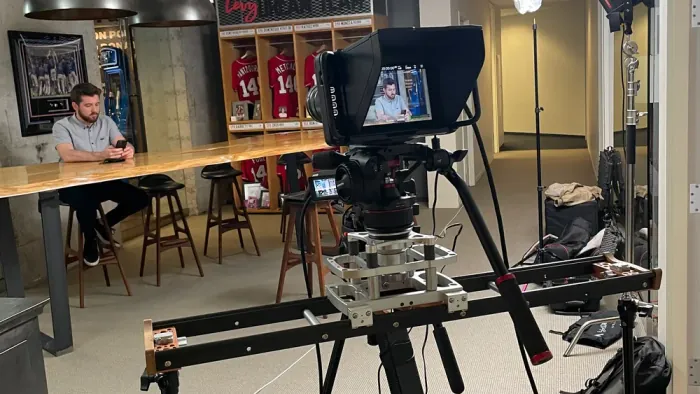
Most executives are not naturally comfortable on camera, which is exactly why preparation matters more than performance. A conversational question guide, a calm set, and careful editing let a leader sound like themselves rather than read a script. The goal is a message that feels human, not corporate.
How office footage helps employees understand the change
Amenities, layouts, and “the vibe” of a space are almost impossible to describe in text. Showing them is far more effective. Coverage of the new environment lets employees picture their commute, their desk, the common areas, and the parts of the experience that written communication flattens into bullet points.
This is the approach we took in our employee welcome video for Wheels’ new Schaumburg office: pairing a message from the CEO with visuals of the workplace so employees understood both the reasoning behind the move and what they could actually expect from it.
How HR can reuse one video across the year
A workplace video is not a one-time announcement. Produced with reuse in mind, the same asset can support:
- New-hire onboarding and orientation
- Recruiting and employer-brand content
- Internal updates and all-hands presentations
- Facility or amenity walkthroughs for future hires
That reusability is part of what makes video a practical investment for internal communications rather than a nice-to-have.
Balancing company priorities with employee-centered messaging
The strongest workplace videos hold two things at once: the business reason for a change and the employee experience of it. A move framed only around cost or strategy can feel transactional. A move framed only around perks can feel like spin. The balance, leadership explaining the “why” alongside a genuine look at what employees gain, is what makes the message land.
What to include in an office launch or employee welcome video
A useful starting checklist:
- A short, direct message from a senior leader
- The reasoning behind the change, in plain language
- Real footage of the space, amenities, and work areas
- A sense of the culture and experience, not just the architecture
- A clear, warm welcome to current and future employees
- A length that respects attention: usually a few minutes, not ten
Handled well, a workplace video does more than announce a change. It helps employees feel informed, included, and confident about what comes next, and it gives HR an asset they can keep using long after the announcement.
Planning a workplace change of your own? See how we approached the Wheels employee welcome video, or learn more about our internal communications video production.