
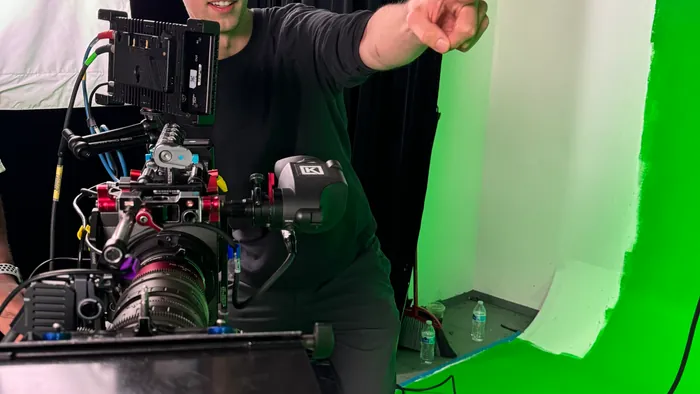
Planning a corporate video shoot is where most productions succeed or fail. A well-planned shoot day runs smoothly, captures everything you need, and delivers footage that edits cleanly. A poorly planned shoot day burns time, frustrates your team, and forces you back for reshoots.
This guide covers what B2B marketing teams need to know before production day begins.
Start with a clear brief
Before you think about cameras, lighting, or locations, you need a written brief. A production brief answers four questions:
- What is this video for?
- Who is watching it?
- Where will it be distributed?
- What do you want the viewer to do after watching?
These four answers shape every production decision that follows. A video for a sales follow-up email is produced differently than a video for a trade show booth. A video targeting procurement managers needs different language than one targeting end users.
If you cannot answer these questions clearly before the shoot, you are not ready to produce the video.
Lock your deliverables before you plan your shoot
Knowing your deliverables is not a post-production question. It is a pre-production question. If you need a 90-second hero film, two 30-second cutdowns, and a 15-second social clip, your shoot day needs to be planned around capturing all the raw material to make those four files.
Common mistake: teams plan a shoot for a single hero video, then ask for cutdowns in post. Cutdowns built from footage shot for a long-form piece rarely work well. The pacing, b-roll coverage, and interview answers are all structured for one length and one format.
Plan your deliverables first, then plan your shoot.
Choose the right location
Most corporate video shoots happen at client facilities. That is usually the right call. Authentic environments outperform studio setups for most B2B content because they communicate context. A manufacturing video shot on the plant floor looks like manufacturing. A technology company video shot in the office looks like technology.
When evaluating locations, think about:
Noise: HVAC systems, open offices, loading docks, and street traffic all create ambient noise problems. Walk your location at the same time of day as your planned shoot and listen carefully.
Natural light: Large windows and good natural light reduce the amount of lighting equipment needed. Overhead fluorescent lighting with no control is the hardest situation to light in.
Space: Camera setups need room. You need space for the camera, a monitor, a light (or two), and anywhere from three to eight people standing behind the camera. A small conference room with 12 chairs in it does not give you that space.
Background: What is behind your subject? A cluttered cubicle farm, a wall covered in unrelated signage, or a messy filing cabinet all read poorly on camera. Identify clean backgrounds in advance.
Build a realistic shot list
A shot list is the production document that tells your crew what to capture and in what order. Without one, you rely on improvisation. Improvisation on a corporate video shoot is expensive.
Your shot list should include:
- Interview setups (who, where, how many camera angles)
- B-roll locations and subjects
- Any specific product, process, or facility shots that need to be captured
- Estimated time for each setup
Build the shot list around your actual shooting day. If you have eight hours on location, plan for six hours of production time. Two hours will disappear into setup, transitions, lunch, and the inevitable delay when the C-suite executive gets pulled into a meeting.
Prepare your interview subjects
Unprepped interview subjects are one of the most common reasons corporate video shoots produce unusable footage. Executives who have not thought about the questions freeze up, give generic answers, or speak in internal jargon that means nothing to the audience.
Preparation does not mean scripting every word. It means:
- Sending interview questions at least 48 hours in advance
- Briefing subjects on the video’s purpose and audience
- Reminding them that short, complete sentences work better than long, qualified answers
- Telling them to avoid referencing specific time periods (“last quarter,” “when we launched in 2019”) that will date the video
The goal is natural, confident delivery. Subjects who have thought about the questions ahead of time deliver better takes, and better takes mean shorter post-production.
Coordinate logistics with your facility
Corporate facilities have their own rules about camera crews, and you need to know them in advance.
- Does your building require advance notice for outside vendors?
- Are there restricted areas that require special clearance?
- Can you use loading docks to bring in equipment?
- Are there any scheduled events, deliveries, or noisy operations happening on your shoot day?
Nothing derails a shoot faster than arriving with a camera crew and finding out the loading dock is blocked, the area you planned to shoot in is occupied, or security requires paperwork you do not have.
What to do on shoot day
On the day itself:
Start with your hardest setup. If you are shooting an executive interview with tight lighting, a controlled background, and specific audio requirements, do that first. Your crew is freshest, your subject is least fatigued, and you have time to reshoot if something goes wrong.
Have a decision-maker on set. Someone with authority to approve or redirect needs to be present. If a subject changes their answer, a location becomes unavailable, or a new shot idea comes up, you need someone who can make decisions in real time.
Capture more b-roll than you think you need. B-roll is the footage editors use to cover cuts in interview answers, add visual context, and pace the edit. Most shoots capture too little. A good rule: for every minute of finished video, you want at least five to ten minutes of usable b-roll.
Review audio on set. Play back early interview takes with headphones and confirm the audio is clean before you move on. Audio problems found in post cannot be fixed. Audio problems found on set can be reshot in minutes.
After the shoot
Production day is the end of the beginning. Post-production follows: footage review, edit assembly, music selection, color, sound design, and multiple rounds of client review.
Before production day ends, confirm:
- All footage is transferred to backup drives (never rely on a single card)
- All releases are signed if you are filming identifiable people
- The shot list is reviewed for any missed items while there is still time to capture them
A clean wrap on production day is the best gift you can give your post-production team.
Simplistic Views is a B2B video production company based in Chicago. We help marketing teams plan, produce, and repurpose corporate video, customer testimonials, brand films, and event content. Start a project with us.